

Different focus types for prescription VDU spectacles
uvex prescription VDU spectacles have been specifically designed for working at a screen, enabling problem-free vision when working on computers. This is why prescription VDU spectacles are ideal for offices and many other workplaces where employees are not required to wear safety spectacles. The specifications and focus types can be adjusted to meet the specific visual requirements of the relevant workplace.
Single vision lenses
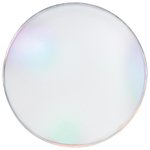
Single vision lenses correct long and short-sightedness.
Single vision
Corrects defective vision caused by long or short-sightedness.
Comfort lenses
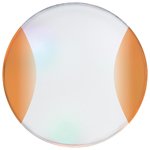
Comfort lenses correct both the wearer’s ametropia and presbyopia and have been optimally adapted to the required working distances.

Nahcomfort
- The perfect solution for working distances between 30 cm and approx. 2 m
- The intermediate zone of the lens surface is determined by the degression chosen and is designed for a distance of approx. 60 to 80 cm
- All that is needed to place an order are details of the close-range values and the required design (type A, B, C)
| Type A | Type B | Type C |
|---|---|---|
| Degression** 0.75 dpt | Degression** 1.25 dpt | Degression** 1.75 dpt |
| Addition < 1.5 dpt | Addition < 1.75 to 2.25 dpt | Addition > 2.25 dpt |
| < 50 years | 50 to 55 years | > 55 years |
** Degression: correction reduced, based on the close-range value
Tip: Ideal for use in VDU spectacles. About 60% of degression is active at the centring cross, so the recommended adjustment applies on the main line of sight.
- Segmentation height measured according to the main line of sight
- Minimum segmentation height: 17 mm



Varifocal lenses
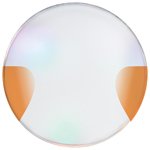
Varifocal lenses correct both the wearer’s ametropia and presbyopia.
- Gradual transition from distance to close-range zone, known as progressive lenses
- Invisible progression also corrects in-between distances
- Clear vision at all viewing distances
- May require an initial phase for adjustment
Varifocal
- Normal distance zone
- Long, narrow progression zone
- Segmentation height measured according to the line of sight when looking straight ahead
- Minimum segmentation height: 23 mm

Prescription VDU spectacles – available models
VDU spectacles enable problem-free vision when working on computers. uvex offers an extensive range of VDU spectacles. So, you can be certain that you will find the perfect pair to suit your needs and your style.
Find a uvex individual personal protective equipment partner near you
Our close-knit network of highly qualified optics, acoustics and orthopaedics experts ensures the availability of first-rate uvex quality of care in your area. You can therefore always rely on short supply routes, perfectly fitted individual personal protective equipment products and optimal protection.

uvex sportstyle RX – prescription sports glasses
uvex sportstyle RX frames are equipped with high-definition (HD) prescription lenses with the latest free-form technology for optimum visual comfort. These lenses made of polycarbonate or Trivex™ guarantee the highest level of protection and maximum performance for a wide range of sports.
Individual personal protective equipment training at the uvex academy
Our uvex academy seminars will enable participants to act as a competent representative within the company for individual personal protective equipment right through to fitting.
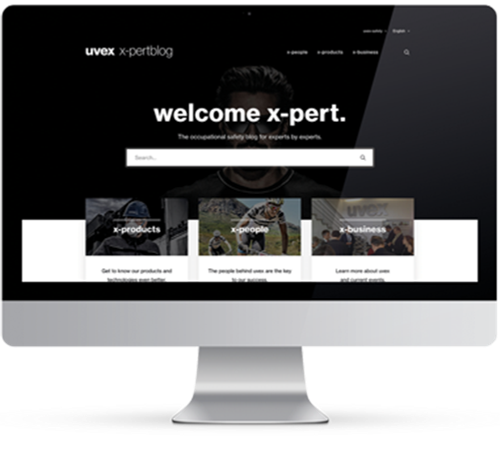
uvex x-pertblog – the occupational safety blog by experts for experts
Learn more about our products and technologies in our fascinating blog articles. Chat to experts and share your experiences.